Bangladesh Garment Wage Protests Disrupt Production at 679 Factories
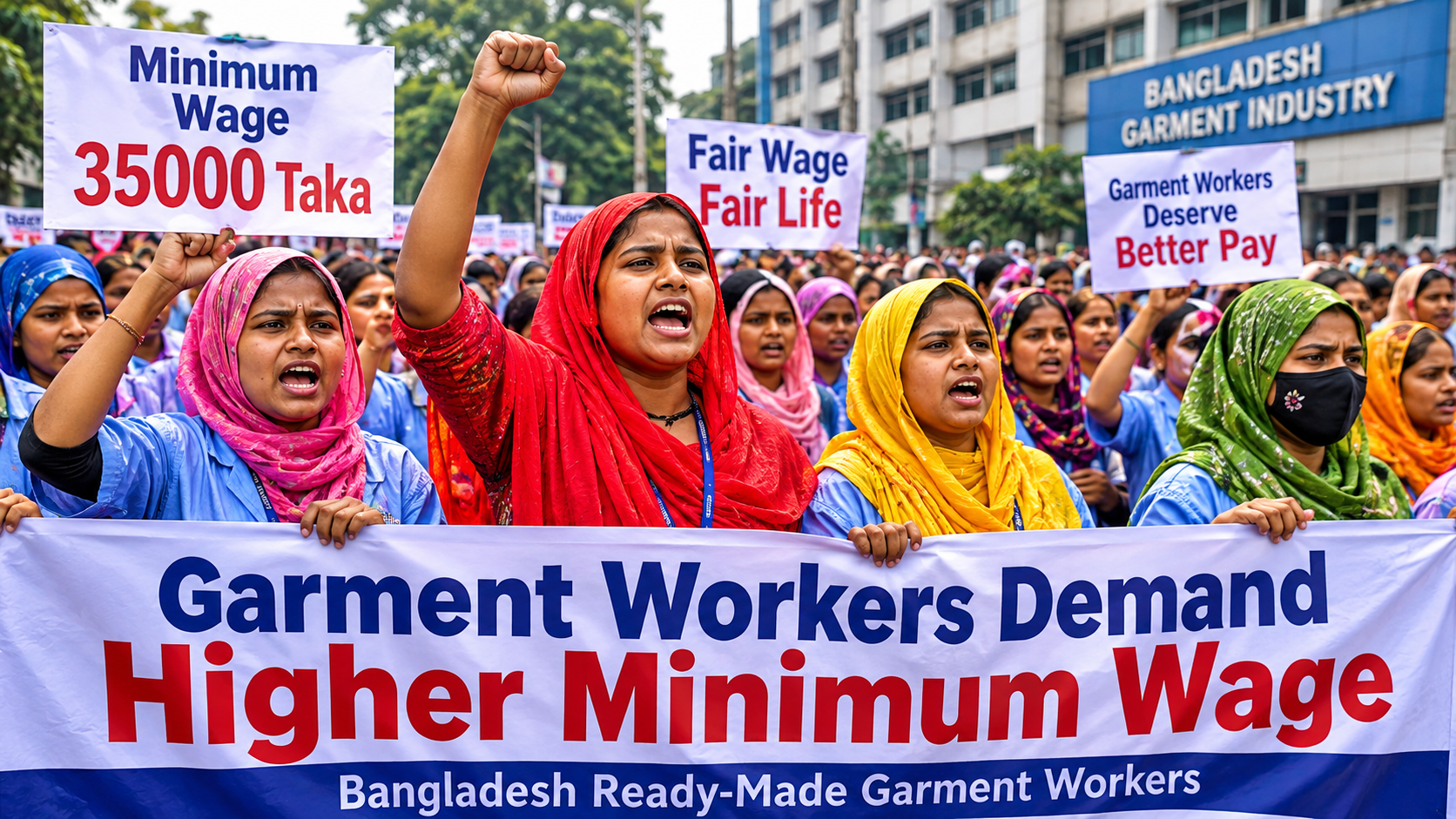
Bangladesh Garment Wage Protests Disrupt Production at 679 Factories
Garment production in Bangladesh faced fresh disruption on November 2 as workers’ wage protests continued across major industrial areas, forcing hundreds of factories to suspend operations following clashes with police.
Workers are demanding a minimum monthly wage of Tk 30,000, compared with the current Tk 12,500. Protests and road blockades were reported in Dhaka, Ashulia and Gazipur, according to Reuters.
Reuters reported that 679 factories halted production during the unrest. Police used tear gas to disperse protesters attempting to block roads. Police and industry representatives also reported damage to factories and the burning of a police vehicle.
Government forms wage board
The government has formed a six-member wage board to review workers’ demands. The move came amid persistent inflation and rising living costs, which have intensified pressure on garment workers.
A workers’ representative on the wage board said wages needed to reflect the cost of living. Workers’ representatives have also argued that international buyers should offer fairer prices to help factories meet higher labour costs.
Industry raises concerns over disruption
Factory owners have warned that repeated shutdowns could affect production schedules and export shipments. Industry representatives cited rising operating costs, uncertainty in energy markets and weaker demand in some export markets.
The Bangladesh Garment Manufacturers and Exporters Association reported that around 20 to 25 factories were vandalised during the unrest, Reuters reported.
The garment sector is central to Bangladesh’s economy. It employs about four million people and accounts for more than 80 per cent of the country’s export earnings, according to Reuters.
A difficult balance
The dispute highlights the challenge of balancing workers’ demands for better wages with the financial pressures facing manufacturers.
Economists cited by Reuters said workers’ demands were understandable in the face of inflation, while warning that a large wage increase could raise production costs and affect the sector’s competitiveness.
A possible path forward, they said, could include phased wage adjustments, improved productivity and fairer prices from international buyers.
The government’s wage board will now face the task of reviewing the competing concerns as the industry seeks to restore stable production.