How Technology Is Changing Everyday Life
# How Technology Is Changing Everyday Life
**By Staff Reporter**
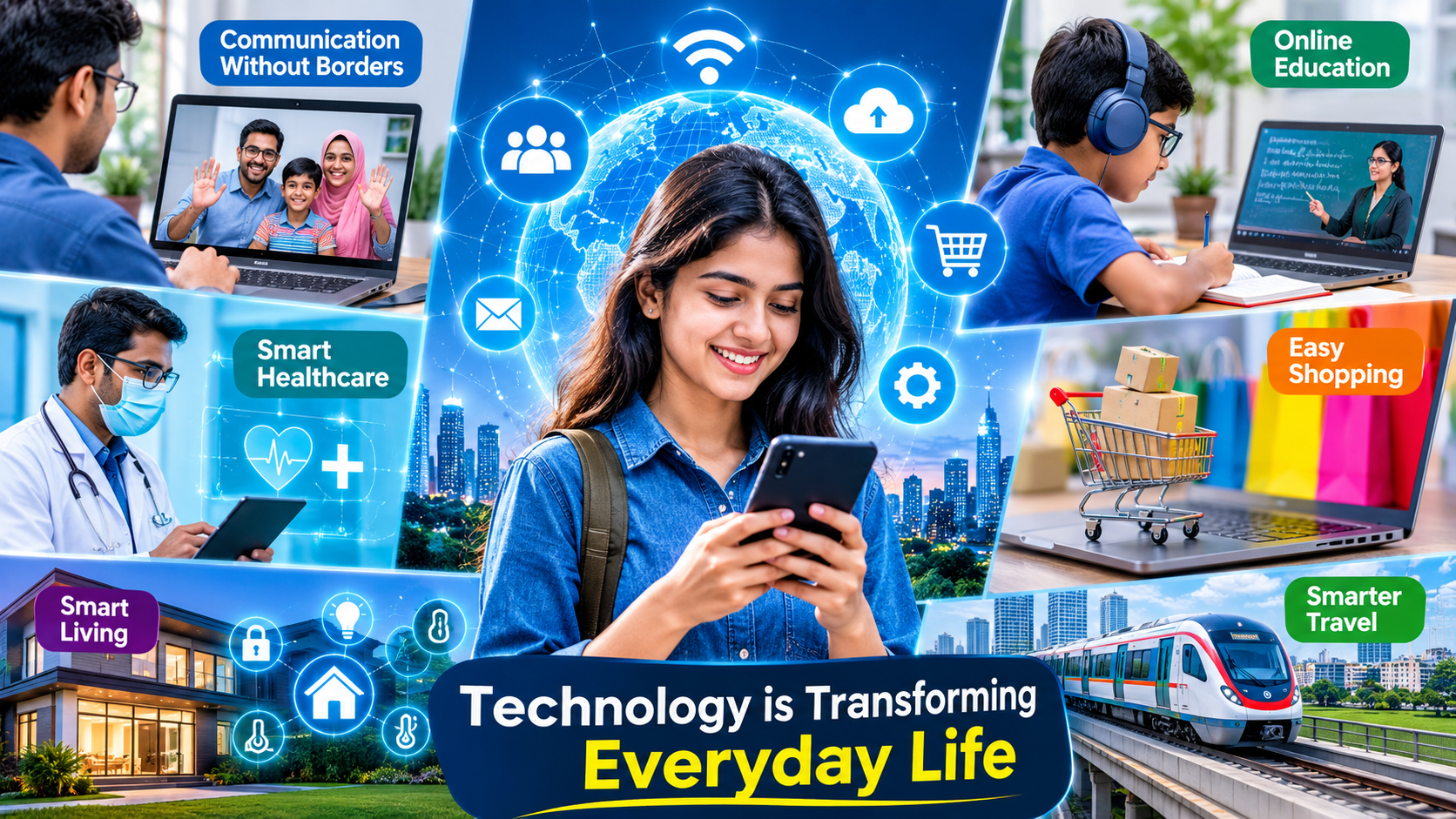
Technology has become an essential part of modern life, transforming the way people communicate, work, learn, travel, shop and access healthcare. From smartphones and artificial intelligence (AI) to online banking and smart home devices, technological advancements are making everyday activities faster, easier and more convenient.
One of the biggest changes can be seen in communication. People can now connect with family, friends and colleagues across the world through video calls, social media and instant messaging applications. Information that once took days or weeks to reach people can now be shared within seconds.
Education has also experienced a major transformation. Online learning platforms, digital classrooms and educational applications have created new opportunities for students to learn from anywhere. Students can attend virtual classes, access digital libraries and use AI-powered tools to understand difficult subjects. Teachers are also using technology to make lessons more interactive and effective.
In the workplace, technology is improving productivity and changing traditional working methods. Businesses are increasingly adopting automation, cloud computing and AI tools to complete tasks more efficiently. Remote working has also become more accessible, allowing employees to work from different locations while staying connected with their teams.
Healthcare is another sector benefiting from technological innovation. Online medical consultations, digital health records, wearable devices and advanced diagnostic systems are helping healthcare professionals provide better services. Patients can receive medical advice without always having to visit hospitals, particularly when access to healthcare facilities is limited.
Technology is also changing shopping, transportation and financial services. Online marketplaces allow consumers to purchase products from home, while digital payment systems make transactions quicker and easier. Navigation applications help people find routes, avoid traffic and save travel time. Mobile banking and financial applications have also made money transfers and bill payments more convenient.
However, the growing dependence on technology has created several challenges. Cybercrime, online fraud, data privacy concerns, misinformation and excessive screen time are becoming increasingly important issues. The digital divide also remains a problem, as many people in rural and economically disadvantaged communities still lack reliable internet access and modern devices.
Experts believe that artificial intelligence, robotics, the Internet of Things (IoT) and other emerging technologies will continue to reshape everyday life in the coming years. These innovations could create new employment opportunities, improve public services and help solve complex problems, although they may also require workers to develop new skills.
Ultimately, technology is not just changing how people use devices; it is transforming how society functions. Using technology responsibly, protecting personal information and ensuring equal access to digital resources will be essential to building a better and more connected future.